Hydrogen continues to gain traction with the potential to be a key pillar in the delivery of the zero-emission targets by addressing the issues of the big three energy consumers including: Electricity, Heat and Transportation fuel. Delivering the targets will require the rapid deployment of Electrolysers, Anaerobic Digestion Plants, Heating Systems, Smart Control and Electric/Fuel Cell Vehicles.
One of the key questions is will we have the required skilled technicians to install, operate and maintain this infrastructure? Having this skill base is as important as the infrastructure therefore, investment in the skills should go hand in hand with the deployment of equipment, policy, regulation and infrastructure
Energy is a Key Industry, it is essential we ‘Keep the Lights On’, ‘People Warm’ on the ‘Wheels Turning’, this pandemic has shown there is a risk to our security of supply if we continue to rely on imported fuels. To alleviate this risk, we need to act now by developing the skilled trade and engineering workforce to build and maintain our energy system in the long term.
At present there are limited Skilled Technicians trained to work on new low carbon technologies so developing a strategy to deliver the skilled workforce is essential. To start filling this gap it is essential the Higher Education Colleges are geared up to deliver apprenticeship programmes. These courses should be aimed at attracting school leavers aged 16 with the options for upskilling.
They should be business led and have strong links with local companies aiming to secure a job at the end of the training and could include new advanced level vocational training. The advanced training should be delivered by a specialist training centre, all courses must be business led and meet industry requirements delivering solutions to issues we have in our economy
Further Education Colleges will have responsibility for attracting students and delivering the apprenticeship training aiming to have every apprentice placed with a business, ensuring a job can be offered at the end of the scheme. Links with Schools and University will be developed to ensure the potential apprentices are trained to an adequate level before starting their career.
Higher level courses delivered at a new specialist Training Centre will include training on areas including high voltage and specialist gas. Essential to the success of Academy will be the interaction with the Industry to ensure it delivers and meets their requirements. Courses will be developed to ensure companies are ready to operate in the new renewable emerging markets.
The training required for the new zero carbon economy will be in the key areas of Energy, Water, Transport, Circular Economy and ICT with skills including; Electrical, Refrigeration, Gas and Heating Specialists, Vehicle Technicians, IT and Communication specialists, Mechanics. The new centre has to address the female gender under representation in engineering with the promotional materials and activities focused on attracting women into the sector.
A key to the success will be developing accredited courses in partnership with relevant professional bodies and ensuring a pathway to accreditation.
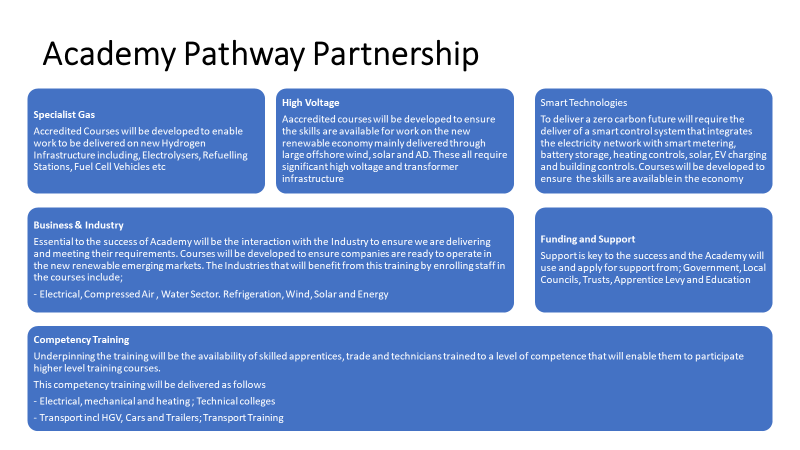
To deliver a zero-carbon future it will require skills and training on the new developing technologies including Hydrogen Infrastructure (Electrolysers, Refuelling Stations, Fuel Cell Vehicles, Storage etc), Offshore Wind, Solar PV, Anaerobic Digestion, Smart control systems including integration of the electricity network with smart metering, battery storage, heating controls, solar, EV charging, building controls and so on. Courses will be developed and adopted to ensure skills are available in the new zero carbon economy.
At Hydrogen Ireland we are committed to working towards this goal.
Mark Welsh